Latest

Your Opportunity at GreenTree

On Sunday, June 3, in his sermon based in Romans 12, Pastor Tim challenged GreenTree friends with an important opportunity. This invitation also applies to anyone who hasn’t found his/her niche in a church family and ministry outlet. If you haven’t heard the challenge in the sermon or would like to refresh your memory, we’ve adapted it here in blog form.

I have a question: where are you in relationship to your church? Every now and then we need to stop and draw a map in our minds of where we are in life. I’d like to say some things to three different age groups in relation to our church. These ages aren’t a clean-cut division; these categories are meant more to reflect where you are.

Age 18 to 35.

If you are age 18 to 35, you may very well be single. You may be a student; you may be considering a career or starting a career. If you are married, you haven’t been married for very long. It’s quite possible that you don’t yet have any kids, especially if you’re on the younger end of this age spectrum…or you may have young kids. There’s a good chance that you’re nearly broke because you’ve just started out in life. It’s possible that you’re renting; maybe you’re still living at home, or maybe you are just now buying a house. You’re still asking and answering a lot of big life-questions, especially if you are still in your 20’s: you’re still becoming who you are going to be.

Ages 36 to 55.

There aren’t very many of us in this age bracket at GreenTree. We have more people who belong to the  upper and lower end of the age spectrum and not as many in the middle. But if you’re in this middle age bracket, you’re probably married or you’ve been married; maybe you’re divorced or even remarried by this point. You may have a career established. You probably own a home now, if you’re ever going to.

If you have children, they are probably already teenagers or young adults. You could even have very young grandchildren. You’re probably dealing with aging parents. You’re beginning to accumulate some wealth by this point—or if not, you’re becoming very concerned. But all in all, you’re probably much more settled than you were in that 18 to 35 bracket.

You may be re-thinking long-held beliefs; this is a time in life where you’ve already pretty much settled what you believe but now you might be saying to yourself, “Wait a minute; maybe not.” Maybe you’re having a mid-life crisis; you’re starting to wonder, “Am I ever going to amount to anything?”

Age 56 to Heaven.

Of course, an 80 year-old is in a different place in life in life than a 56 year-old, but if you’ll just humor me, we’ll group you into this general stage in life if you fit in this age category. You are established financially by this point, or (as Dave Ramsey says) you’re thinking about buying a copy of One Hundred and One Ways to Fix Dog Food and Like It. Your marriage is in the golden years. Or perhaps you’re a widow or widower. You’re most likely retired, or you’re working and really feeling it. Maybe you’re playing with hobbies, playing with grandchildren, or playing with great-grandchildren. You’re advising your adult children (or trying to and pulling your hair out). You’re not likely at this point to make any big life changes that you’re not absolutely forced into.

The Oldies: Your Great Opportunity  

Many of you in this final age bracket have shown great loyalty to me over these dozen years I’ve been the pastor here. And you are, except for a few exceptions, the ones who are giving the significant amount of money that goes into funding the church, and we appreciate that greatly.

We want you to engage the rest of us. I don’t mean nag us; I don’t mean preach at us; but we want you to interact with us. We need some advice. We need some direction; we need, sometimes, even some rebuke. And we want you to show some leadership, while letting us take some leadership.

The Youngers: Your Great Opportunity

You have unique resources here. Those of you in the younger category have incredible opportunity in terms of your church. You have a church, with older people with a unique quality here: they have withstood great changes. Many people in the older age bracket just don’t do it. They can’t take it when a church goes through the metamorphosis that GreenTree has undergone. What’s more, you have a group of older people willing to fund the church and willing to help you move forward. And you have a church that has no debt, and small utility bills, even though it has a small budget. It’s very workable. You have the best of both worlds: the freshness of a church plant and the facilities, people, and structure of an old church. You have a pastor who is willing to maintain a good relationship with the older people while looking forward. You have the opportunity, young people, to make this church whatever it needs to be to reach out to your generation.

But the older group has something to say to you, and they’re saying it kindly:

We want you to get some skin in the game. We know you don’t have very much money; give a little bit. Take some leadership. Show up. Commit to doing some things. Dream up something that you love: bring it to us. We’re willing to fund it for a while if we see you making an effort to take some ownership. Now, we know that might mean we’ll have to put up with some things that are just a little bit “too young” for us. But we’re willing to do it if you will take some ownership. Young people, you have an incredible opportunity.

Now, all of us need to get “skin in the game,” don’t we? All of us need to make some commitments, to make church life what it ought to be. And you have an opportunity to take a small church that’s wide open to all different kinds of ideas, and make it into what will be necessary to meet your needs, to have you involved, and to meet the needs of those that are your friends and your peers.

If you’d like to learn more, go to the Sermons Page and explore with us in Romans 12, learn a bit about the kinds of commitments that God asks us to make. And let’s ask and answer this question, in relationship to your local body of believers: How will your church impact your life, and how will your life impact your church?

Guest Blog: Growing in Love with God

This guest blog is written by Laura Goodman. Laura is a teacher at Community Bible Study, which meets at Pinedale Christian Church on Thursday mornings. Leaders at Community Bible study yearly write a personal devotional piece to share with the group; this is part of Laura’s devotional writing, about her personal experience with the desire to grow in relational closeness with Jesus. If you wonder what it means to “grow closer to God,” and want to know how that’s done, take this refreshing blog post as an inspiration and encouragement to begin with God right where you are.

As I look back, I realize that I was stuck in a spiritual rut for years without knowing it. I was stagnant. I would give God whatever time I had at the end of the day, right before bed, sometimes ending up falling asleep within a few minutes of opening my Bible. Worship at church on Sunday mornings was great, but only if we sang the songs I liked. The pastor’s message was moving, but I mostly thought it was just what everyone else needed to hear.

I was a fairly new youth pastor’s wife at the time and I wanted people to know that I had it together. That worked until I volunteered to teach a High School girls’ Sunday School class. What a challenge that was. Did I mention that my co-teacher was the most godly woman and the most gifted teacher I knew? I was put in my place, and I quickly figured out that I could do NOTHING without Jesus. It was a huge lesson learned as I realized I didn’t know quite as much as I thought I did and not nearly as much as I wanted to. God was so gracious to me, and through much humility, He gave me such a hunger and thirst for the Word that I had never experienced. It proved to be a pivotal moment in my walk with Christ.

But something was still missing. During a sermon our pastor asked the question, “If Jesus was all you had in heaven (no mansion, streets of gold, no reuniting with loved ones, etc.), would you still want to go? Would Jesus be enough?” Fear gripped me as I sat there, and I knew the answer was, “No, Jesus was not enough.” I had what I thought was a strong faith and a hunger for God’s Word, I loved Jesus for what He did on the cross for me, but I did not have a deep intimate love for Jesus that, in my human mind, would last for eternity. I think we can have great faith but still miss our True Love, and that is where I was. As I wrestled with that, I was determined that I would love him more, seek him more.

In the book Pilgrim’s Progress, the character Christian and his friend and fellow sojourner, Hopeful, go through numerous depressing and hindering trials, almost costing them their lives at times on their way to the Celestial City. When they finally get near the City, this is what they experience:

“. . . The beauty of the City and the radiance of the sunbeams coming from it were such a glorious sight that Christian became sick with intense longing. Hopeful also was stricken with the same affliction, and because of their pangs they lay there for some time crying out, ‘If you find my beloved one, tell Him that I am sick with love.'”

That is the intimacy I desired, and I immediately knew that my quiet time was the first thing that was going to have to change. The core to any relationship is quality time. In my previous quiet times I was not being silent before the Lord to listen, confess sin, to worship Him, and meditate on what I was learning and what He was teaching me. But where was I going to find the time when I wouldn’t be distracted by kids or fall asleep? I decided I would have to get up, exercise to get myself awake and then do a quiet time.

The first week was so hard. I would start off feeling great, but by midday I was tired, which made me cranky and tired for the rest of the day. But I stuck with it and now I don’t function well without it. It is a habit; it is a part of me. I enjoy that part of my day the most.

But not every day do I feel like worshiping Him early in the morning. On those tough days, my quiet time starts like, “God, I will praise you today even though I don’t feel like it because you alone are Worthy and if I won’t, the stones will cry out.” That very statement helps bring me into a worshipful state, and I am blessed even more those times because it puts me in my place. It helps me to see how much I need Him and how I really can’t do anything successfully without Him.

So now my daily prayer is that I would fall more and more in love with Him every day. I still am processing what that looks like by asking the question: “What is your part, God, and what is mine? You have to do the revealing and fill me with your Love if I do the seeking, right?” For I have figured out that surprise, surprise, I can’t do it on my own!! Although it has been a steady and somewhat slow process, I feel so much closer to my Lord and Savior than I have before, I have a growing love for Jesus that I have not experienced before. The greatest part about it is that I am never satisfied; I just continue to want more.

Maybe you have struggled with this too. Maybe I am the only one, and that’s okay. I am so thankful that God did not leave me where I was. May we be constantly humbled to have the experience of being drawn close to and loved by a sovereign and intentional God. May we all love Jesus as deeply as we see in Song of Solomon:

“For your love is better than wine.” Song of Solomon 1:2

“My Beloved is mine and I am His…” Song of Solomon 2:16

“…If you find my Beloved tell Him I am lovesick.” Song of Solomon 5:8

Sharing Manna Garden

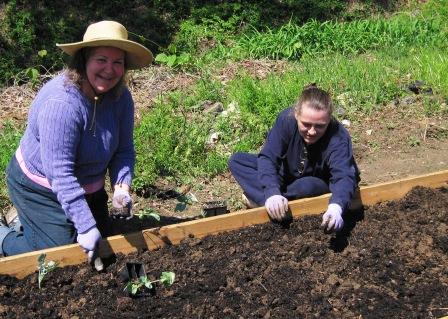
GreenTree’s Sharing Manna Garden is underway! The content here is almost the same as what you’d see on our new brochure. Feel free to look through the information and enter any questions into the comments section and they’ll be directed to Ely Wakefield, our community garden mentor.

Mentoring. Personal Empowerment. Sharing.

The vision of Sharing Manna Garden is to encourage sharing together by mentoring others in the knowledge and skills they need, which will empower them in their own lives and in giving to one another and the community.

Mentoring

“Anyone can garden,” says Ely Wakefield, our community garden mentor. “Children, middle aged people, and older people can garden.” Sharing Manna Garden is for you, no matter your age or level of experience. In volunteering to help with the work of Sharing Manna and receiving its benefits, you’ll be part of a mentoring program which will help you develop your gardening education. Sharing Manna Garden is also part of the NC Cooperative Extension’s Forsyth County Center on Fairchild Road in Winston-Salem, which provides resources such as Master Garden classes and gardening resources. Ely Wakefield, who teaches Sharing Manna gardeners, has received her training from the Master Gardening program of the Cooperative Extension.

Personal Empowerment

We don’t just want volunteers or recipients of vegetables. We want those volunteers to learn the skills that will empower them to expand their personal lives, work with others as a team, and realize new opportunities. When you share in the work and resources at Sharing Manna, you’ll be broadening your education and your awareness of the needs in your area, growing in relationships, and strengthening your ability to provide for your loved ones and your community. 

Sharing 

The spirit of sharing lives in each aspect of the Community Garden. Your mentor shares invaluable insight with you; and as you learn, you share your knowledge and help with others. By working together, the team shares friendship, the workload, and the common goal of sharing resources with the community. Join Sharing Manna Garden today and experience the beauty and joy of gardening!


How Can I Help?

DONATE! You can give seeds, plants, or money via GreenTree between 6:00-9:00pm on Wednesdays, 10:00am-1:00pm on Sundays, or call Ely Wakefield (336) 577-1539 to arrange a drop-off time. Seeds and money can also be mailed (see back for address). Other needs are tools, water hoses, and a storage shed.

DIG IN! Each Saturday, between the hours of 9am-4pm, you can give of your time and energy by cleaning, weeding, watering, planting, or harvesting.


The Story of Sharing Manna Garden

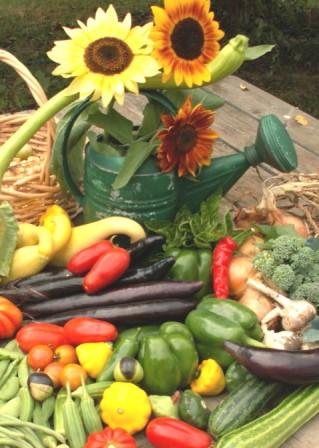
In the spring of 2011, the dream of a garden began to take shape when a big group of members and friends of GreenTree shared the work of pulling out rocks and pavement behind the Community Center. What resulted was a 20×12 ft. patch of garden which produced peppers, zucchini, squash, cherry tomatoes, cucumbers, and other ripe vegetables. It was nice to see vegetables at our café counter, but we soon began to learn of needs in our community group and began to experience, firsthand, what it felt like to share food with others, straight from the ground of our property.

Now the garden has expanded in size and the opportunity has expanded with it. A year later, we’ve been able to remove trees and allow more space, making room for both raised-bed gardens and in-ground gardens. There is now room for a larger vegetable garden in the back area, an herb garden behind our adjacent building which will contain raised-bed and container gardens, a flower garden that fringes the front and sides of the Community Center with color, and a rain garden which will catch runoff from the gutter in the back of the building with water-resistant plants.


Drop-Off Times

  • Wednesdays 6-9 pm
  • Sundays 10am-1pm
  • Saturdays 9am-4pm

 Work Times

  • Saturdays 9am-4pm


Benefits of a Community Garden

  • Beautifies the area
  • Helps the environment
  • Encourages teamwork
  • Inspires sharing with the community
  • Contributes tangible food resources
  • Teaches life skills and personal independence
  • Provides opportunity for physical exercise
  • Offers potential for friendships
  • Saves money
  • Grants opportunities to teach and involve youth


For More Information Contact Us!

Sharing Manna Garden

www.forsythcommunitygardening.com

Ely Wakefield, Community Garden Mentor

(336) 577-1539

Belem1948@yahoo.com


GreenTree Community Center

930 S. Broad Street

Winston-Salem, NC 27101

greentreews.com/

(336) 692-3237 (Pastor Tim Gross)


Forsyth County Cooperative Extension

1450 Fairchild Road

Winston-Salem, NC 27105

http://www.forsyth.cc/CES/


~God Almighty first planted a garden.

And, indeed, it is the purest of human pleasures.~

~Francis Bacon


This Exciting Thing Called Prayer, Part One: Desperate House Cat

Last week I was sitting with my beloved group at GreenTree, listening to prayer requests and jotting them down, and I began to smile when I looked at all the faces. Some I haven’t known very long; some are as familiar as relatives. Something startled me. A question, flashing in color, as I saw everyone in that moment. Do we—whether we’re fresh young spirits, steadily growing lives, or seasoned believers—really know, or remember, the pulsating power we have when we get together and pray? 

Do we have any idea?

My cat offered me some thoughts a few days later.

(For the better parable, read the story of the persistent widow and the grumpy judge in Luke 18, told by the Master Storyteller. God just happened to use this one for me because it (or she) was in the house, in my face.) And if you like cats, you’ll appreciate my plight. If you don’t like cats, that’ll work too; you’ll feel my predicament even more.

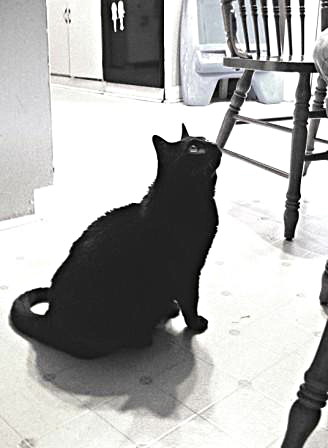
Andrea isn’t a perfectly well-behaved cat. Really, she probably isn’t even an average-behaved cat. When she gets aggravated from too much handling, or simply feels grumpy, she does this ninja move and scratches my leg, leaving a long, red zipper-line. Then there’s the regular cat stuff: asking to go outside, then pawing at the door two minutes later because she’s changed her mind and wants to come inside; nose-bumping our elbows at the dinner table; stepping right in front of our feet when we walk through the house so that we’re in danger of crashing face-first onto the floor at any moment.

Yet, her most annoying cat trait of all might be worse than the scratching. It starts every day around 3:30pm and does not end until 4:45.

I’m sweeping the floor in the middle of the afternoon and I hear a familiar ring—whiny like an alarm clock, confident as a veteran salesperson. I hardly notice at first, for its very ordinariness. Minutes later, I’m putting the books in the shelf, and again it rings. Down the hall I go, sit at the computer, and the sound follows me, slicing the air with that round, tinny wail.

Ra-eeowr.

I swivel my chair around, look down at the ball of black fur with those large and  glowing green eyes and reply, as I do every day around 3:30, “Andrea, it’s not time.”

Ra-eeoowr.

Nope.”

I’d rather feed her at 6:00, when the family eats—or maybe 5:00 if that won’t do, since that’s at least a nice round marking-off-the-hour time. But long ago, through kitten-hood up to now, after long days of persistent begging, failed cat-diets, and behavioral training, the little thing wore me down to 4:45pm. And we’ve been there for quite some time.

Ten minutes later, I wince.

Ra-eeeooowr.

“NO, Andrea.”

Really, I think cat meows are cute. I like little kitten yelps, I like to imitate cat-growls, and I get a kick out of the way our neighbor’s Tabby mutters to himself when he walks around in our yard. But like the story of those water-torture methods where the victim starts to feel each drop as a hammer on his skull, my cat’s meow turns, with each repetition, from cute to exasperating.

Ra-eowr. Ra-eowr.

I love animals, I do. I’m not exactly an animal rights activist, but I have a compassion for the feelings of my Furry Americans. Even the deepest motherly love, though, can wear thin if stretched far enough. And so, my commitment to keep Andrea on schedule, despite her begging, changes from a quiet tolerance to a jaw-clenching resolve to hold on until 4:45.

Ra-eoowr! Ra-eowr!

Honestly!—Sometimes it reminds me of labor pains. At first there’s a good bit of time between contractions; then, they get closer and closer until you wonder when the full-blown symphony orchestra is going to just get on with it. This cat starts off small and ends up sounding just about like one of those big loud beeping hospital machines. And there it goes again—

Ra-eoowr! Ra-eeeooooooowr!

Jesus uses an unjust (and cranky) judge in His parable, a man who is continually pestered by a widow who pleads with him for justice against her enemy. He doesn’t even have the tolerance and kind intentions toward the woman that I have toward my cat. Yet his resolve is growing thin too, with each knock, with each determined question. And, though he’s not the nicest guy on the planet, he finally gives in and helps her.

The One we pray to, in our circle at Growth Group, hears each knock, each repetition, the same ones, every week, the silent pleas, said in every prayer session:

Please heal my friend who has cancer.

Please help me to see hope in this. I feel like I want to give up.

Please keep my granddaughter safe as she leaves China.

Please help the families of the students who were killed.

 Ra-eeeooooooowr . . . .

That rhythmic calling-out, and learning to be daring enough to continue, are as important as a baby’s growing awareness that his needs get met when he cries. It shows us our dependence. It reminds us that the very fact that our hearts are beating and our lungs are breathing is caught up in God. Through crying out, and practicing the faith not to give up, we learn who we are, and who God is. With a need as continual as a knock, metallic as a cat’s meowing, steady as an exhale—we are the abused widow, the impatient cat, the weak humans with our human days and cravings.

Yet there’s one very important difference: God is no cranky judge. God is no over-busy cat owner. God is no tired parent. God is Love. God is Wisdom. Jesus says, in His superior story, “to always pray and not give up.” To always pray and not give up—that is the nourishing breath we can take in, before we exhale our plea, our prayer, our cry that we have cried every day until now.

And so, when I get tired of working on my computer, and I glance over at the cat with the big moon eyes, and try to imagine what it must feel like to be a small creature, I finally forget my urge to whack her on the behind and I smile a little bit.

Ra-EEEEEEoooooooooowr!!

I look at the clock; it’s 4:41. I turn toward her; she jerks her body up in a burst of hope. When I stand up, she flies off the bed and skurries down the hall toward her bowl, delirious with joy that relief is finally coming. “Mreep! Mreep!” she sings in little joy-screeches; and I say, laughing at her silliness, “I guess four minutes early doesn’t matter.”

To always pray,

 is the echo of Jesus throughout the world,

and not give up.

The Lion in the Cave

“Look,” John says, “the Lamb of God, who takes away the sin of the world!” Christ is the Lion of Judah, but the Lamb-ness of Jesus resonates with us this time of year. The rich symbolism throughout the old stories of the Law, the heart-tugging sense of injustice we feel when we see pictures of white, sweet lambs being killed as sacrifices for the wrongdoing of people—this is, perhaps, why the symbol of the Lamb so grabs our attention when we look ahead to Easter.

The picture of the Lamb teaches us of the unthinkable act of love. We see images of a soft, white creature slashed with a knife, blood blazing against the cloud background of wool. Our hearts hurt when we look at the sweet little animal. And we wince when we see, beside it, a blood-smeared leftover of a man we recognize as our Lover, our Friend. Such images feel appropriate to the ashen, cloudy face of a Good Friday.

Then on Sunday, the sun explodes in gold. The burst of sweet candy in our mouths instead of eggs for breakfast. Lilac and yellow, blue and pink, splatter in crazy happiness all around us as we celebrate in our churches, practically yell out worship melodies….He is risen! From Good Friday to Easter Sunday, from complete dark to dazzling light, we’ve vicariously felt the manic-depressive roller-coaster that Jesus’ poor followers must have ridden. Utter black bleakness one day, confusion the next, then blinding delirious happiness the third day. Lamb on Friday. Lion of Judah on Sunday.

But wasn’t the Lion always there?

Maybe there’s a lesson for us in the disciples’ (and our) inability to see any spark of Lion before Sunday, whether it’s in the Easter season, or during a time of loss, confusion, or stress, where no windows show themselves. In those intervals, we might feel the lamb-like softness of God’s love pillowing our heads, and we’re glad. But what we also want, for some sense of hope, is a hint of Lion. We want to see, in the hollow pit, a divine wink.

We already know that Jesus wasn’t total Lamb during His ministry. He’s the one who sat kindly on a donkey on the way to Jerusalem, then slammed the money-tables in the temple with a furious roar.

The same gentle Rabbi, who softly prepped His learners about his upcoming death, growled, “Get behind me, Satan!” when Peter protested the idea.

In that beloved Lion story by C. S. Lewis, Aslan quietly makes an arrangement with the gleeful White Witch: with a lamb-like quietness, he plans the sacrifice which will save Edmund at Aslan’s own expense. Yet when the witch asks, “But how do I know this promise will be kept?” Aslan roars with such thunderous authority that “the witch, after staring for a moment with her lips wide apart, picked up her skirts and fairly ran for her life.”

The same Jesus who kept meek and mute at His trial muscled his Lion-strength to take on both body-torture and spiritual abandonment. C. H. Spurgeon remarks, “To us, sensations such as our Lord endured would have been insupportable, and kind unconsciousness would have come to our rescue.”

His Lamb-like love gives us comfort. His Lion-strength gives us hope.

If I’d lived back in time when He was here in the flesh, and watched Him die, I think I’d have suffocated in the ink-black despair that comes when a small faith lets itself be deafened out by silence. Maybe there were some who had that spark of faith in the corner of their eyes, even in the confusion of unfathomable tragedy.

It’s a lesson they all had to learn. It’s a lesson we still have to learn, in our own witching hours. The lesson of the Lion in the cave.

It’s not faith in nothing. It’s not faith in faith itself. It’s faith in Someone who promised something, faith that strains itself, trains itself to see in the gloom that tiny pin-light that hints, It’s not over.

Like the end of a morose movie where we’re struck dumb by the tragedy we just witnessed on screen…the Hero is dead. But just before the credits start rolling—what is that?—one eye opens. Then whoosh—the picture blacks out, and we’re in our seats, waiting in hope, knowing there’s going to be a sequel. One tiny glimpse and we’re given the hint—in an almost playful, teasing way—that this is not the end.

Then our agonizing question is answered, after the silence is so long that we don’t think we can last through it any longer. The Lion breaks out of the cave with a Roar-Call that catches us up and out of the water with a huge gulp of oxygen and a burst of relief that makes it all seem as if it were only a bad dream—

And we cheer, as loudly as we can, “HE IS RISEN!!”

This is our Lion, and our Lamb.

As Mr. Beaver says to Edmund and the other children,

Wrong will be right, when Aslan comes in sight,

At the sound of his roar, sorrows will be no more,

When he bares his teeth, winter meets its death,

And when he shakes his mane, we shall have spring again.

From Friday to Sunday and every day, may we be fed by His Love. May we be allured by His Power. May we remember, when we’re happy and singing in the radiance of light, that the Fire never really went out.

~A. G.